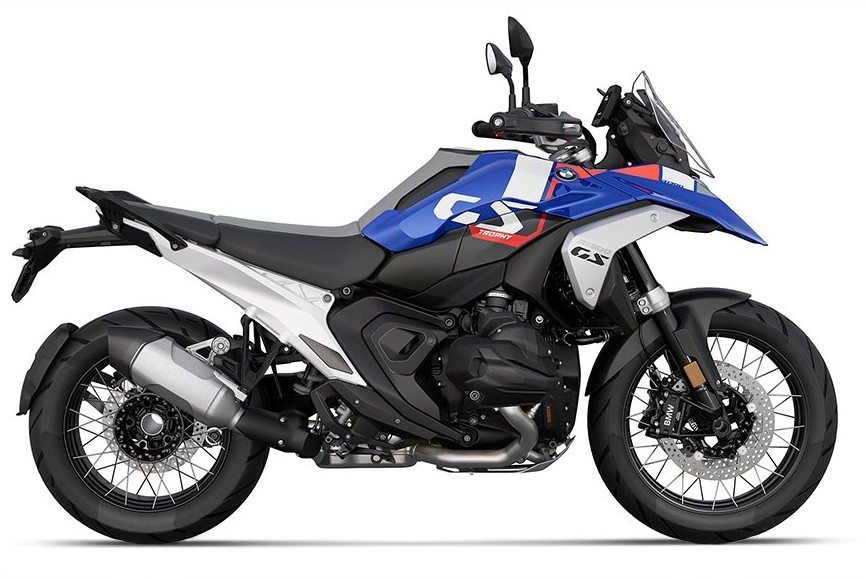
BMW R1300GS
BMW R1300GS is a large adventure/touring motorcycle produced by BMW Motorrad since 2024. It succeeds the R1250GS and represents a new generation of BMW’s iconic boxer-engine adventure bike.
General Information
- Manufacturer: BMW Motorrad
- Model: R1300GS
- Class: Adventure / Touring enduro
- Year introduced: 2024
- Predecessor: BMW R1250GS
Technical Specifications
Engine & Performance
- Type: Two-cylinder boxer, air/liquid-cooled, DOHC with BMW ShiftCam system
- Displacement: 1,300 cc
- Bore × stroke: 106.5 × 73 mm
- Compression ratio: 13.3 : 1
- Maximum power: 145 hp (107 kW) @ 7,750 rpm
- Maximum torque: 149 Nm @ 6,500 rpm
- Transmission: 6-speed gearbox
- Final drive: Shaft drive
Chassis, Suspension & Brakes
- Frame: New steel frame with pressed elements and aluminum rear subframe
- Front suspension: EVO Telelever
- Rear suspension: EVO Paralever
- Suspension travel: 190 mm (front) / 200 mm (rear)
- Front brakes: Dual 310 mm discs, 4-piston radial calipers
- Rear brake: Single 285 mm disc
- Wheels: Front 19" / Rear 17"
Dimensions & Weight
- Seat height: approximately 850 mm (depending on version)
- Wet/curb weight: approximately 237 kg
- Fuel tank capacity: 19 liters
Overview & Character
The BMW R1300GS is a modern evolution of the legendary GS line. It delivers more power, reduced weight, a new chassis, and an array of advanced electronics. Designed for long-distance touring and off-road adventures, it combines versatility, comfort, and precise handling, making it one of the most capable adventure bikes on the market.
Pros & Cons
- + Powerful and refined boxer engine with high torque
- + Premium build quality and advanced equipment
- + Excellent suspension and electronic systems
- + Great comfort and long-distance capability
- – Heavier than lightweight adventure bikes
- – High purchase price and maintenance complexity
- – Tall seat height may challenge shorter riders
- – Complex electronics can increase service costs
